
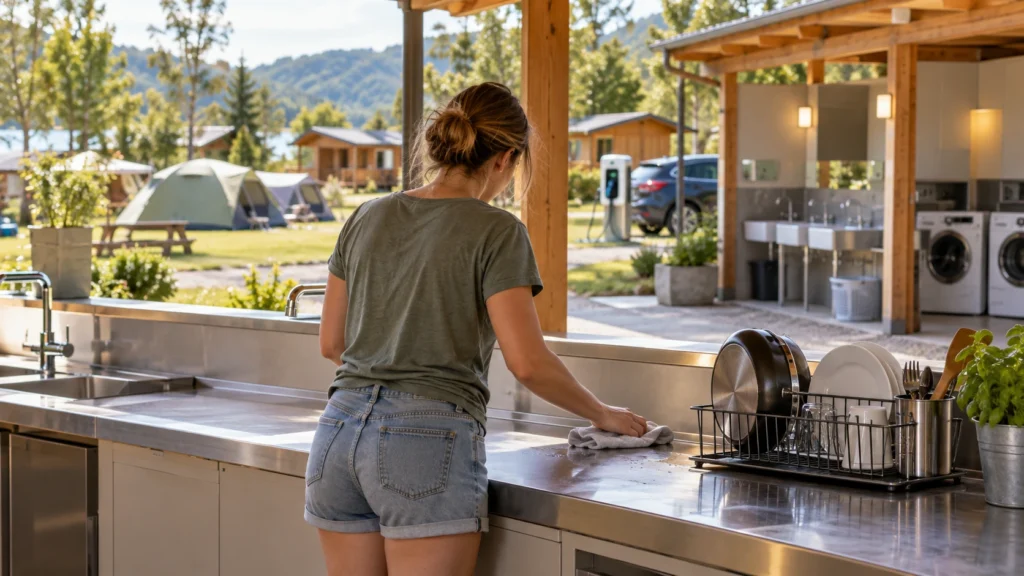
Shared facilities make camping more convenient, but they also require a little awareness of the people using them next. Most problems are ordinary ones: a wet floor left behind, a pan occupying the only clear counter, or laundry forgotten in a machine. Knowing the common mistakes when using shared camping facilities helps you avoid awkward moments and makes everyday routines easier for everyone.
Arriving without a plan for access
One easy mistake is assuming that every facility will be available the moment you arrive. Reception hours, access cards and seasonal arrangements can affect when you can use kitchens, laundry rooms or sanitary buildings. If you expect to arrive late, check the campsite’s arrival instructions before setting off and find out how you will get access to what you need that evening.
At some campsites, camping guests can use a self-check-in machine outside reception hours, while access cards for the guest kitchen and laundry are issued at reception. Those are separate details to plan around. For instance, a family arriving after reception closes might bring a simple meal that needs no oven, then collect its access card when reception opens. The point is to make the first evening comfortable without assuming that check-in automatically gives you access to every room.
Treating bathrooms as private space
A shared shower or toilet is still someone’s immediate living space for a few minutes. Leaving toiletries spread across a sink, taking a long shower when others are waiting, or leaving water and packaging on the floor makes the next person’s visit less pleasant. Keep your things together, leave the area as you found it and take personal items back to your pitch or cabin.
There is also a difference between cleaning up after yourself and trying to manage a problem you cannot fix. If a drain is blocked, a fixture is damaged or supplies have run out, tell campsite staff. Moving to another available facility may be the practical short-term answer. The campsite has three sanitary buildings, including toilets and showers, as well as changing facilities and an accessible bathroom; guests should still check which facilities suit their needs on arrival.
Letting the kitchen become a storage area
Shared cooking facilities work best when guests prepare food, eat and clear away promptly. A common mistake is leaving ingredients, utensils or dirty dishes across the worktop while going back to the campsite for something else. That prevents other people from preparing their own meals, even if the oven or hob is free.
Bring what you need in one trip, including a way to carry dirty dishes back if necessary. Use only the space you need, watch food while it cooks, and wipe surfaces after preparing a meal. Check where waste belongs instead of leaving it beside a full bin. If you are cooking for a group, consider a meal that can be prepared in stages rather than occupying several surfaces at once.
It is also worth checking which equipment the kitchen actually provides. The campsite describes a guest kitchen with ovens, but that does not tell you which pans, knives or other utensils will be available. Packing essential cooking items avoids building dinner around equipment you have not confirmed.
Forgetting that laundry is a shared schedule
Laundry facilities are especially useful during longer stays, but machines are easy to tie up accidentally. Starting a wash just before leaving for an afternoon activity may mean that clean clothes sit in the machine long after the cycle ends. Other guests then have to wait or decide whether to move someone else’s belongings.
Choose a time when you can return promptly, and set a reminder if that helps. Check the machine instructions and any posted rules before adding detergent or selecting a cycle. Once your clothes are dry, clear the dryer and its surrounding area. Do not assume a vacant basket, counter or machine is personal storage space. A small amount of planning can make laundry less disruptive to your day as well as to other guests.
Misusing electricity and charging points
A campsite power connection may look convenient, but it is intended for the uses allowed by that campsite. Do not assume that a pitch connection can charge an electric vehicle. At the campsite, charging a car directly from power posts or cabins is prohibited. If you are travelling by electric vehicle, check the charging arrangements in advance and plan your route accordingly.
For ordinary camping equipment, follow the site’s connection guidance and ask staff if you are unsure about a device or charge. Keep cables arranged so they do not get in the way of people walking through the area. The same courtesy applies around shared sockets: avoid leaving equipment connected after you have finished using it when others may need the space.
For more detailed information on this topic, read our guide on How to Choose the Right Cabin for a Relaxing Family Holiday.
Overlooking shared outdoor areas
Facilities extend beyond buildings. Paths, play areas and nearby activity spaces serve many families at once. Leaving shoes, toys or camping gear in a walkway can inconvenience others, while treating a play area as a place to store belongings reduces the room available for children to use it.
Children may need help understanding that shared equipment has turns and that other families use the space differently. Keep an eye on belongings, follow any posted guidance and move aside when a busy path or entrance needs to stay clear. If travelling with a dog, check the campsite’s rules before using shared grounds; at the campsite, dogs must be kept on a lead and exercised outside it.
A little consideration goes a long way
The most useful habit is to think about what the next guest will find. Check access arrangements before arrival, bring the supplies you need, clear facilities promptly and report problems that require staff attention. Shared camping facilities are easier to enjoy when everyone can use them without first dealing with someone else’s unfinished task.